Est. 1920 · Nagore, Tamil Nadu

A century and more offaith, service and amanah

Drawn from the Sangam’s centenary souvenir, its photographs and its own record — the story of this house and the names of the hands entrusted with it, from the registration of 1920 to the present term.

100+
Years of service
330
Signatories, 1922
330
Signatories, 12 streets
8
Institutions & wings

நூற்றாண்டு · The Century

Six eras of the Sangam

Drawn from the centenary souvenir of the Sangam — its own account of the hundred years between the founding and today.

Anno

1920

1920 — 1929

Resolved in Rangoon

Resolved in Rangoon

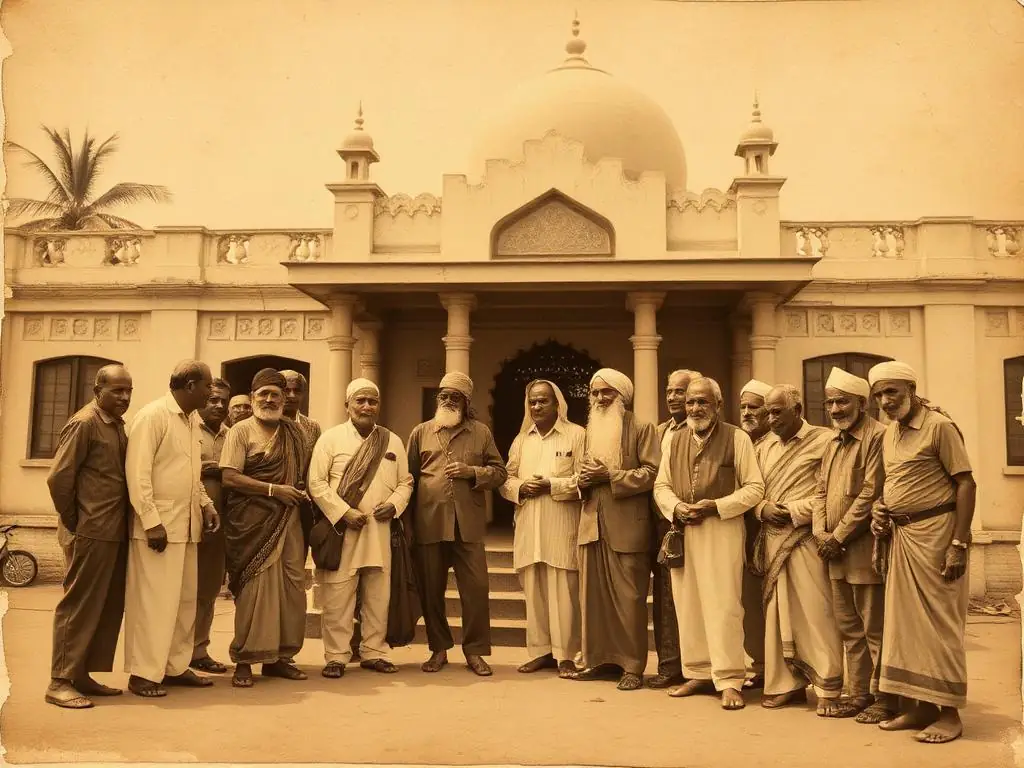
Nagore merchants trading in Burma put the question at a meeting in Rangoon — what shall we call it? — and settled on Ghouthiyya, after Ghouthul Azam Abdul Qadir al-Jilani. The name came home, the muhalla ratified it, and on 23 March 1920 the Sangam was registered: the first sangam registered in Tamil Nadu, the souvenir records. The traders bought the ground and building for Rs 1,700, when a gold sovereign cost Rs 1.85, and shipped ten tons of teak home by sea. In April 1921, its hall still going up, the Sangam joined in receiving the Ali Brothers and their mother Bi Ammaa for the Khilafat movement — and carried her in procession from the railway station the following year. In 1922 a general body of 127 members elected its first committee under Haji A. M. Siddique Malimar; a madrasa and a thinnai school opened at 22 South Street; and on 22 November, 330 men and women of twelve streets signed the Ezhu Lebbai Jamia Masjid — three centuries old, and thirty-five years without settled administration — into the Sangam's care. On 25 August 1929 the general body resolved that girls must be taught alongside the madrasa.
War, relief and recognition

The Baithu Sabha grew out of that first Khilafat reception and came into its own in these years — two rows of twenty on the daff, first prize at Keezhakkarai against the sabhas of twenty towns, and first prize again at Thanjavur's Meelad parade, where the elders titled a boy named E. M. Hanifa. When war drove Nagore families home from Burma and Malaya, the Sangam founded the Nagore–Burma–Malaya Evacuee Relief Committee to receive them, chaired first by S. K. Marakayar. Government recognition came by order of 4 June 1946, and with it aid as a minority institution under Articles 29 and 30 of the Constitution, championed by Quaid-e-Millat M. Muhammad Ismail; the school of five standards became one of eight. On 1 January 1947 M. S. Noor Muhammad Marakayar began a standing gift of Rs 50 a month for education, and on 27 February the Sangam kept its silver jubilee.

The thirty-year wait

The thirty-year wait

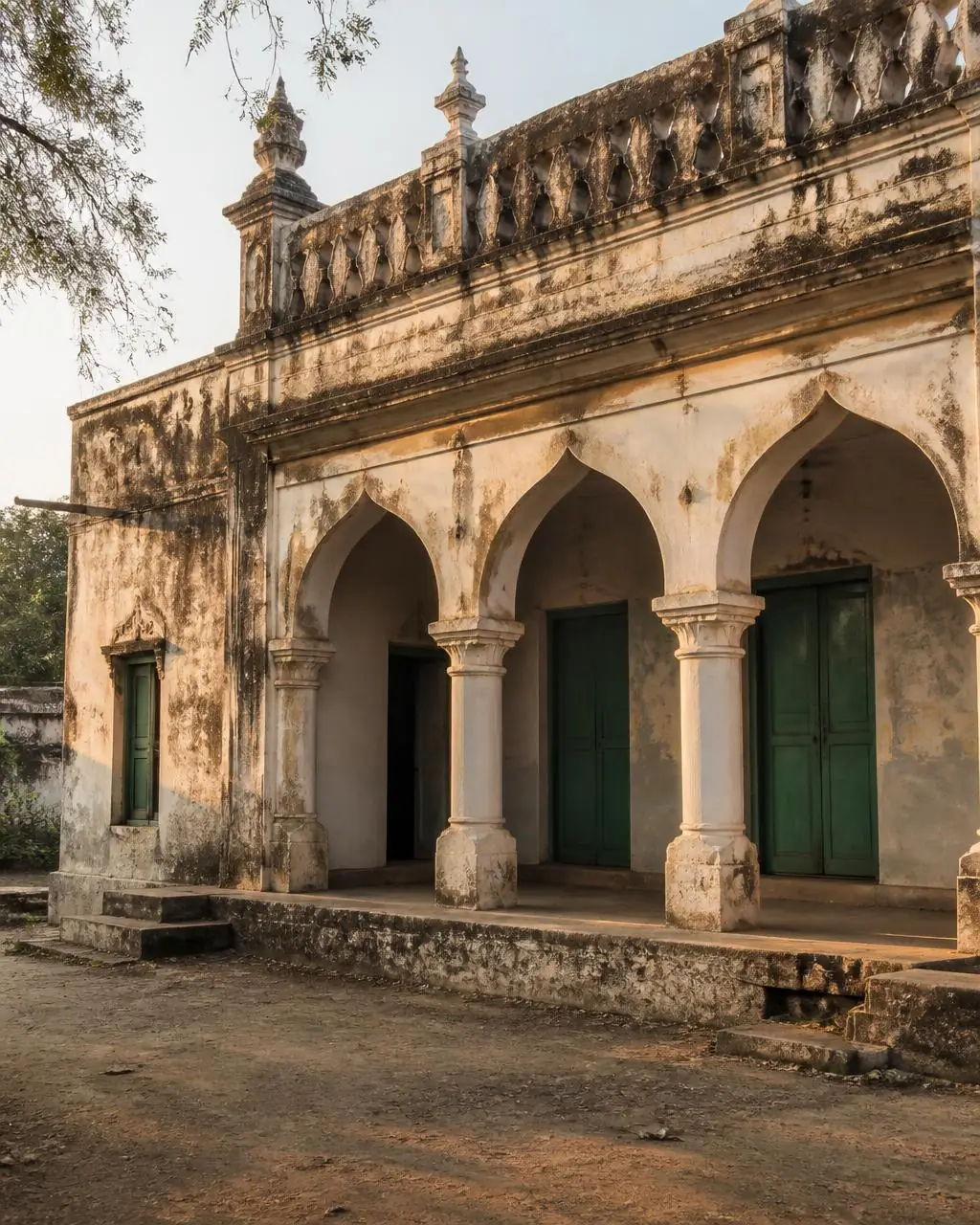
The 1948 silver jubilee souvenir recorded the founders' wish for a high school. It took thirty years. In the meantime the school taught on — of the ten candidates sent to the ESLC examination in 1953–54, eight passed. In 1978 the Tamil Nadu government raised it to a government-aided high school, through the efforts of Dalda A. Ahamed Neyna Marakayar, Haji M. A. Kamil Malumiyar, Haji M. S. M. Ismail Marakayar and others, and it was opened by Justice M. M. Ismail, Chief Justice of the Madras High Court. The building it occupies has its own history: an English lady built a church there for her own use during British rule, and made the site over to the school when she left.

A son of Nagore made Governor

A son of Nagore made Governor

On 27 October 1980 Justice M. M. Ismail was sworn in as acting Governor of Tamil Nadu, brought to Nagore in procession and received at the Sangam — the souvenir calls it the most important reception in its history. He had schooled in Nagore, spoken at the dargah's Meelad at nine years old, and studied Tamil under U. V. Swaminatha Iyer. The Sangam's own position was less grand: in May 1982 a new committee found Rs 100 in hand and went door to door through the muhalla, raising some Rs 6,000 in two days, and turned the disused Baithu Sabha room into the Sangam office. In 1986 the executive committee opposed the making of a film on the Nagore saint, and the attempt was dropped. In 1992–93 the sporting club's own tournaments raised Rs 23,000, which built the entrance arch that has since stood through storms and the tsunami.

The register, and the twelfth standard

A membership register was instituted in 1996 and identity cards issued to members for the first time; that year the Sangam received G. M. Banatwala MP, named Best Parliamentarian of the World by the British House of Commons. In 1998 the school was raised to higher secondary — on a self-finance basis rather than government aid, which it remains, and which the Sangam still hopes to change. Then came the building years: the first Namakku Naame grant of Rs 9.60 lakh in 2008; the hall fully renovated in 2009 for Rs 1,75,000; and between 2009 and 2013 the Correspondent travelling to Dubai at his own expense with the President, returning with seven classrooms at Rs 2.5 lakh each, while some Rs 16 lakh in government instalments brought ten more and 150 sets of bench and desk. In 2008, through M. G. K. Nizamudeen, the works of the Nagore scholar Ghulam Qadir Navalar were nationalised by the Chief Minister.

The students come back

A compound wall and office at the mosque tank in 2014; the buildings at Puthumanai Theru made waqf, now housing a post office and a ration shop; a covered platform at the burial ground in 2022 so that burials could go on through the rains. Correspondent Haji A. H. Abu Thaha carried the schools through the COVID-19 years after four decades of service. In 2022 former students formed an alumni association and gave the school its computers and smart classrooms, two new classrooms, and cash awards for the toppers of classes ten, eleven and twelve. Two aims stand recorded in the centenary souvenir: to see the higher secondary school made government-aided, and to grow the Ghouthiyya schools into a college.

1 / 6

சாதனை · Achievement

Raised by gift, not by fee

Almost everything the Sangam holds was given — the ground, the timber, the classrooms, the walls. The souvenir records each gift by name and by sum.

₹1,700
The ground itself, bought in 1920 — a gold sovereign then cost ₹1.85
10 tons
Teak shipped home from Rangoon by sea to raise the hall
₹55 L
Five classrooms, from the development fund of former MP D. Raja
7
Classrooms raised at ₹2.5 lakh each from donors approached in Dubai
10
More classrooms under the Namakku Naame scheme, about ₹48 lakh
150
Sets of bench and desk for the schools
₹6.25 L
The covered burial platform at the mosque, 2022
₹3.5 L
The flood wall around the Ezhu Lebbai Jamia Masjid

மாணவர்கள் · Those it taught

Students of this school, in the service of the state

  • Janab M. Bava MohideenDirector of Collegiate Education, Government of Tamil Nadu
  • Janab Muhammad Farook, B.E.Chief Inspector of Factories, Government of Tamil Nadu
  • Janab M. Abdul RahimDeputy Secretary, Government of Tamil Nadu
  • Nagore E. M. HanifaThe singer titled Isaimurasu, who began in the Sangam's Baithu Sabha as a boy

விருந்தினர்கள் · Those it received

Received in the Sangam hall

  • Justice M. M. Ismail — Chief Justice of the Madras High Court, Governor of Tamil Nadu
  • Perarignar Anna — C. N. Annadurai
  • Quaid-e-Millat M. Muhammad Ismail
  • G. M. Banatwala MP — named Best Parliamentarian of the World by the British House of Commons
  • Sirajul Millat Abdul Samad Sahib
  • Hajiya Aabaadi Baanu Begum — Bi Ammaa, mother of the Ali Brothers

கௌதிய்யா பைத்து சபா

The sabha that taught Nagore to sing

Founded within the Sangam after about 1930 and grown in the 1940s, the Ghouthiyya Baithu Sabha led the town's wedding, circumcision and Meelad processions, and welcomed its Hajis home from the railway station before dawn. Many towns in Tamil Nadu have a baithu sabha today; the souvenir records that this one came first.

The idea was born from a reception. In April 1921 the Ali Brothers came to Nagore with their mother Bi Ammaa, and the Sangam and the Nagore Muslim Jamaath received them with baith-singing and the daff. The Sangam’s own hall was still going up. Out of that evening grew a sabha of its own.

It kept a separate administration — a president, a secretary, joint secretaries, a treasurer, and captains who marshalled the singers in procession — and by its own rule handed its surplus to the Sangam. It sang in two manners, adipaithu with the drum and sadha baithu without, and wore a white gulla cap, a blue shirt and a white kaili.

Its processions began at ten at night after the feast, wound street by street, entered the dargah through the Alangara Vasal for ziyarat, and ended between one and three in the morning. On the morning a Haji returned, its members rose before dawn, gathered at the Ghouthiyya Mahal and walked to the railway station to meet the six o’clock train with takbir.

The processions have stopped. The young men went abroad and the times changed, and the room the Sabha used was folded into a classroom. The singers it made are still singing, in Nagore and in other towns.

20 + 20
Two rows of twenty, striking the daff in unison
₹15 / ₹10
The procession fee, with uniform and without — free for poor families' weddings, on application
20 towns
Defeated at Keezhakkarai, where the Sabha took first prize
10 pm – 3 am
A procession's hours, lit by petromax lamps carried on the head
  1. பகுதாது நானா

    Bakhthadu Nana · 1900 – 1971

    Chief khalifa and, in the souvenir's word, the backbone of the Sabha until his death. He served more than thirty-five years as an ustad of religious education and lead singer, and was a master of silambam who trained many of the town's young men.

  2. புலவர் ஆபிதீன் காக்கா

    Pulavar Abideen Kakka · 1916 – 1966

    Painter, poet, singer and writer, who composed a great part of the Sabha's repertoire. The Sangam's elders gave him the title Mangala Kavignar. The southern end of South Street is named Abideen Square after him.

  3. நாகூர் E. M. ஹனிபா

    Nagore E. M. Hanifa · 1925 – 2015

    He joined the Sabha at ten or twelve years of age, and it was his training ground. At the Thanjavur Meelad parade the Sangam's elders titled him Kokilath Thoniyan — his first award of any kind. The Sangam arranged his first public performance at Abideen Square, and he became the singer Tamil Nadu knew as Isaimurasu.

  4. கவிஞர் நாகூர் மு. காதர் ஒலி

    Kavignar Nagore M. Kadar Oli · wrote for the Sabha 1970 – 1993

    Titled Mangala Kavignar in 1975 on the Sangam's behalf. He records having written more than fifteen thousand songs in his life, and chaired the committee that produced the centenary souvenir from which this account is taken.

Office Bearers

The names the souvenir records

The office bearers the centenary souvenir records — the first committee of 1922 and the thirty-one names of 2022, with the terms the souvenir itself preserves.

Thalaivar

Tap any name to read what the souvenir records of that office.

Today

The schools and the mosque today

Alongside the principal offices, these responsibilities are recorded in the souvenir's list of 2022.

Correspondent, Ghouthiyya Schools

Haji M. Muhammad Ismail Naina, B.Sc.

since 2022

Headmaster, Higher Secondary School

S. Sheik Jahangir, M.A., B.Sc., B.Ed.

present

Headmaster, Primary School

M. Muhammad Ali, M.A., B.Ed.

present

Administrative Mutawalli

Haji S. M. Syed Ibrahim Naina

present

Mutawalli

Janab A. M. Vikayathullah Marakayar

present

Mutawalli

Haji J. Syed Yakub Hasan Marakayar

present

Accountant

M. Y. Mahmood Marakayar

present

Chairman, Centenary Souvenir Committee

Kavignar Nagore M. Kadar Oli

centenary

நூற்றாண்டு நற்பணி

வளரட்டும் நம் நாகூர் கௌதிய்யா சங்கம்; வாழ்த்தட்டும் வருங்காலத் தலைமுறைகள்.

May our Nagore Ghouthiyya Sangam grow; may the generations to come bless it — from the President's message in the centenary souvenir