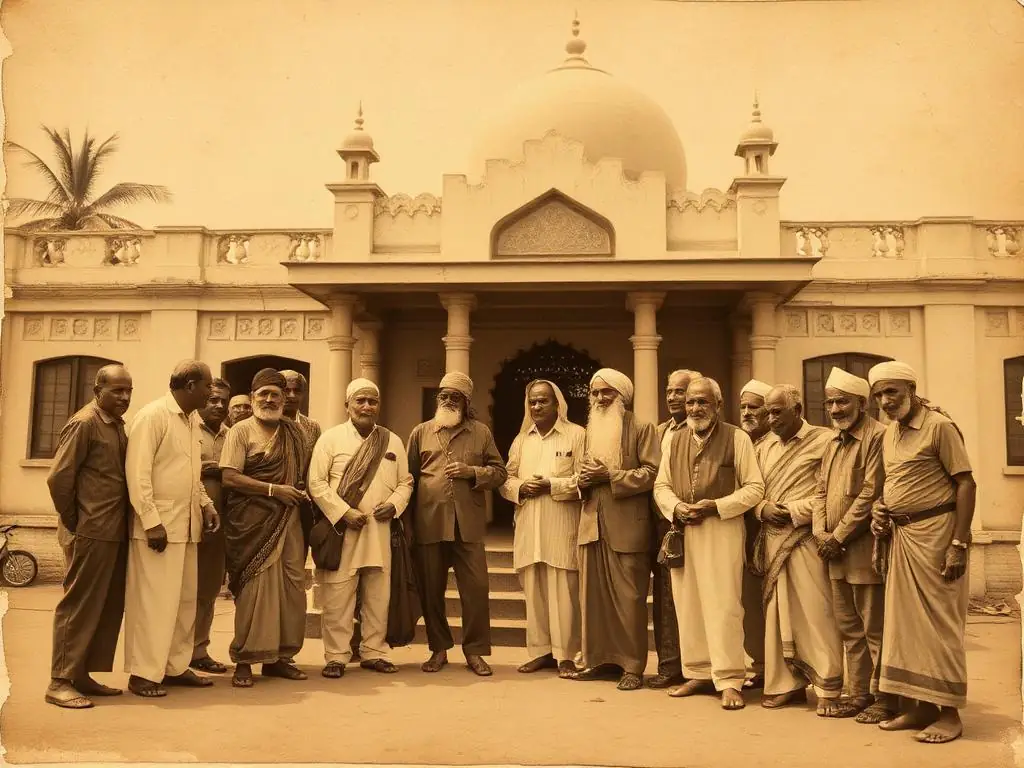
The Sangam was not resolved upon in Nagore. It was resolved upon in Rangoon, at a meeting of Nagore merchants trading in Burma, who asked what such a body should be called and settled on Ghouthiyya, after Ghouthul Azam Abdul Qadir al-Jilani. The name was carried home, the muhalla was convened, and on 23 March 1920 the Sangam was registered — said to be the first sangam registered in Tamil Nadu.
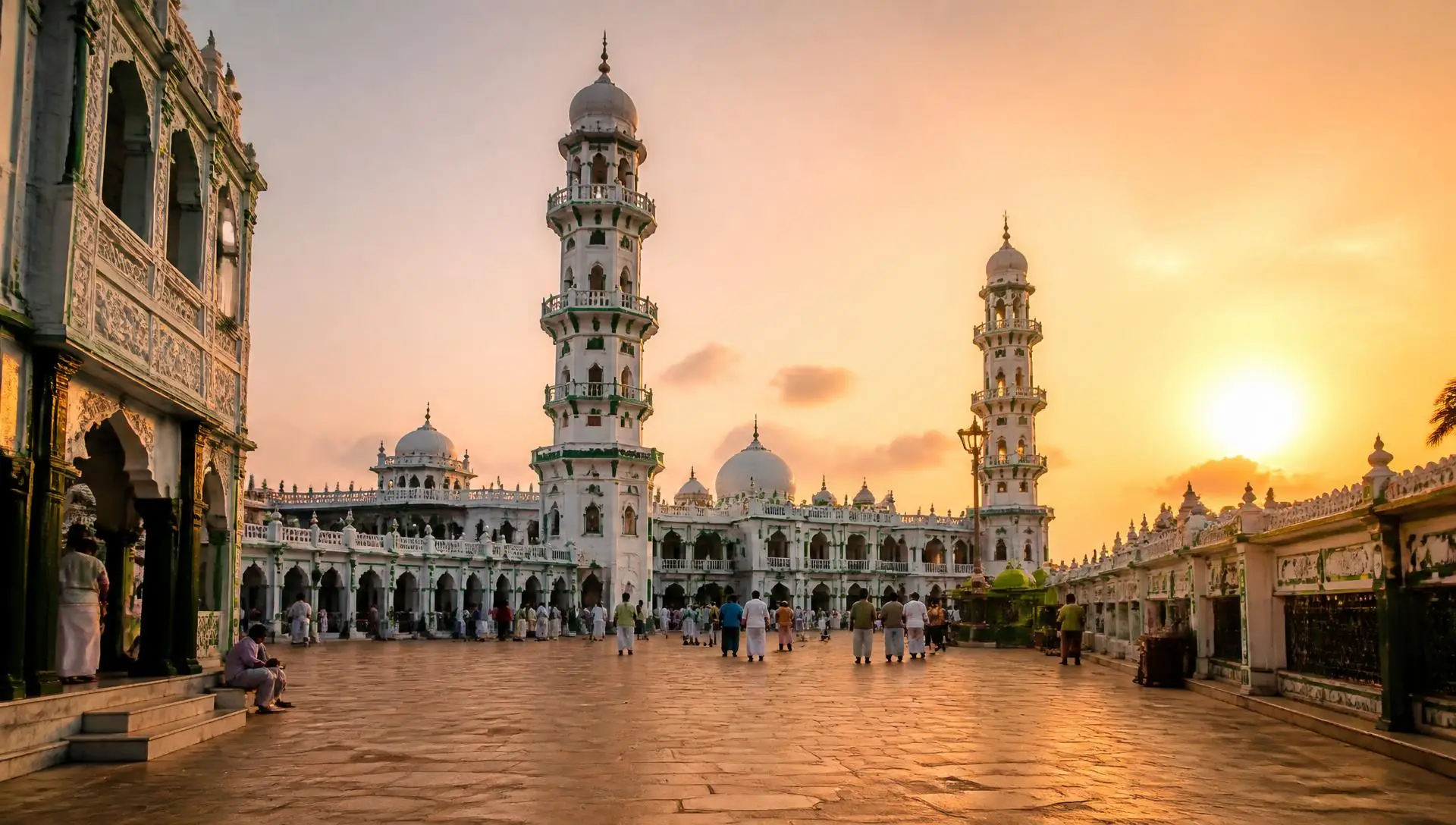
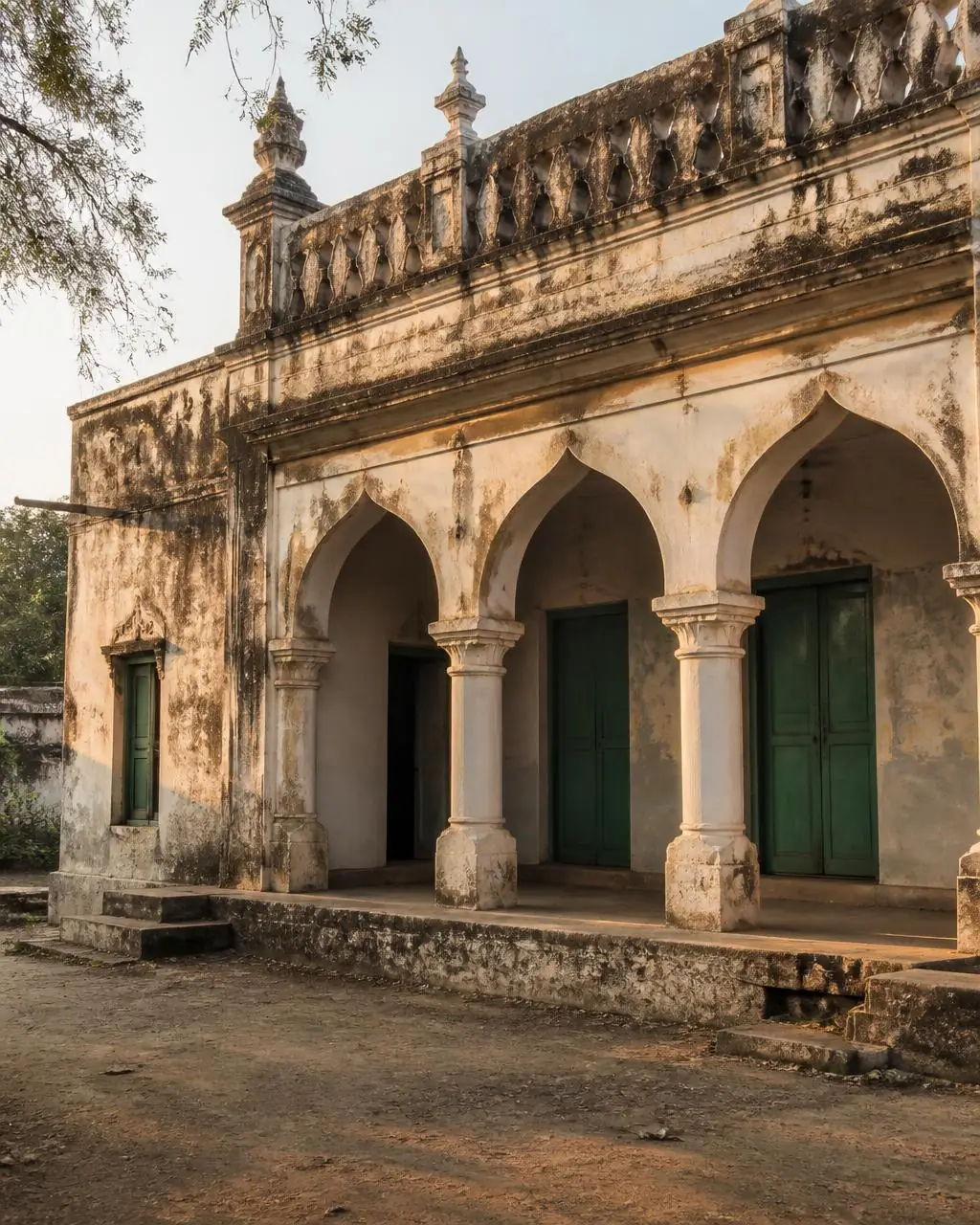
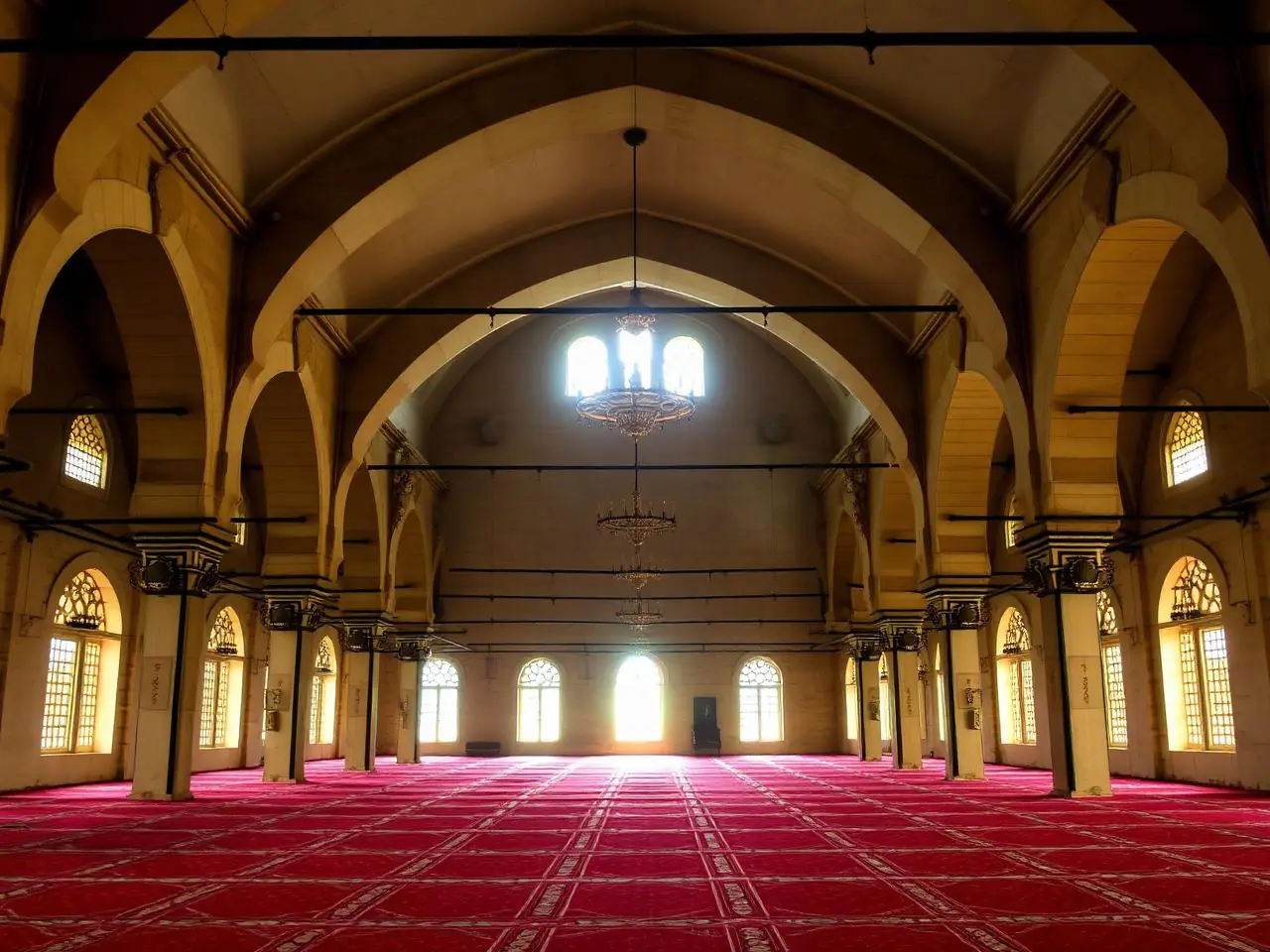
Those same traders bought the ground for Rs 1,700 and shipped ten tons of teak from Rangoon by sea. By 1922 a hall stood on South Street, an ustad taught in the madrasa, and a school had opened on the thinnai to the fifth standard. In November that year, 330 men and women of twelve streets signed the Ezhu Lebbai Jamia Masjid — a mosque already two centuries old — into the Sangam’s care.
The school became government-aided in 1946, a high school in 1978, and a higher secondary school in 1998; it teaches children of every community of Nagore, taught by teachers of every community. As the souvenir puts it, the Sangam is a banyan of many aerial roots — a school, a madrasa, a mosque, a sabha of singers, a sporting ground, and the students it has sent out for a hundred years.